Resources
How to govern an autonomous agent.
Oversight law, approval gates, data residency, secrets handling, MCP and agent memory — plus the API reference and the security model. Written to be useful whether or not you ever sign up.
6 shelves · 6 guides · everything free to read
The library
Six shelves. No gate on any of them.
Each one is a real destination with real content behind it — nothing here is a placeholder for something we intend to write.
- 01
Blog
Field notes on running a company with an agent — playbooks, teardowns, and the thinking behind how Monopea operates. Written for founders doing the work.
Open - 026 guides
Guides
Evergreen explainers on the hard parts: human-oversight law, approval gates, data residency, secrets handling, MCP, and agent memory. Useful whether or not you ever sign up.
Start with EU AI Act Article 14: human oversight for AI agents
Open - 03
API & MCP docs
The REST /v1 surface, the WebSocket chain-of-thought stream, and the MCP server — with the auth model, the proposals lifecycle, and copyable calls.
Start with Quickstart — auth, then one call
Open - 04
Security model
How the gate, the write-only vault, tenant isolation and the signed audit chain are actually built — the page to hand your reviewer.
Open - 054 comparisons
Comparisons
Honest, axis-by-axis comparisons against the alternatives — including the ones we lose on, because a comparison that never loses is an advert.
Open - 066 playbooks
By profession
What a governed agent does for founders, fiduciaries, law firms, medical practices and agencies — written per trade, not per feature.
Open
The blog
Field notes, most recent first.
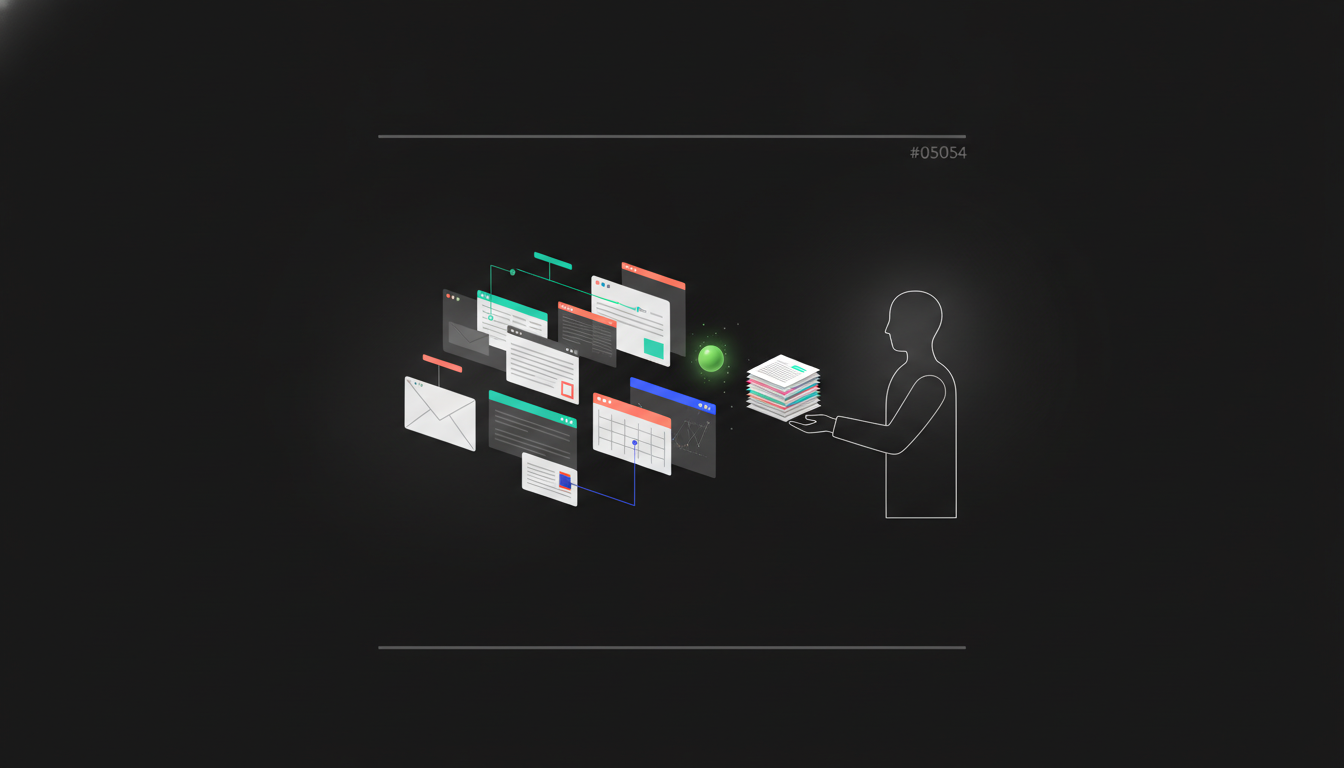
Guide6 min read
Autonomous AI Agents for Startup Operations: A 2026 Implementation Guide
Learn how to implement autonomous AI agents for startup operations in 2026. A practical guide on bounded autonomy, governance, and real ROI for founders.
Read article
Guide6 min read
Human-in-the-Loop AI: Building Trust and Control in Autonomous Startup Operations
Learn how human in the loop AI agents build trust and control in autonomous operations. A practical guide for founders implementing HITL workflows today.
Read article
Guide7 min read
AI Chief of Staff: A Founder's Guide to Autonomous Operations in 2026
Explore how an AI chief of staff for founders automates operations in 2026. Learn to scale without headcount using governed, human-in-the-loop agents.
Read article
Guides
The parts that are actually hard.
Evergreen explainers, each one a concept defined honestly before it is connected back to how we implement it. Regulatory pieces teach the requirement — they are not legal advice.
- 01
Guide · Compliance
EU AI Act Article 14
What the EU AI Act’s human-oversight requirement means for AI agents — oversight as an external control, not a prompt instruction — and how to architect for it.
- 02
Guide · Security
Approval gates
Why “always ask first” in a system prompt is not a control — and what a real approval gate looks like: default-deny policy, a proposal lifecycle, fail-closed unknown tools, and audit chains.
- 03
Guide · Residency
Swiss data residency
What Swiss data residency really means for AI agents — FADP basics, the storage-versus-processing distinction vendors blur, CLOUD Act exposure, and the questions to ask any provider.
- 04
Guide · Security
Secrets management
Why an AI agent must never see your credentials, how prompt injection turns context into an exfiltration channel, and the write-only vault pattern that fixes the class.
- 05
Guide · Concepts
What is MCP?
The Model Context Protocol — the open standard connecting tools and data to AI agents, and the layer where governance either happens or doesn’t.
- 06
Guide · Concepts
Long-term memory
Why persistent memory turns an assistant into an operator — and why it must be tenant-owned, inspectable, and stored somewhere you can name.
Hand it the first job this afternoon.
Open a workspace, give the agent a task, and approve what it proposes. Stored in Switzerland, processed in the EU.