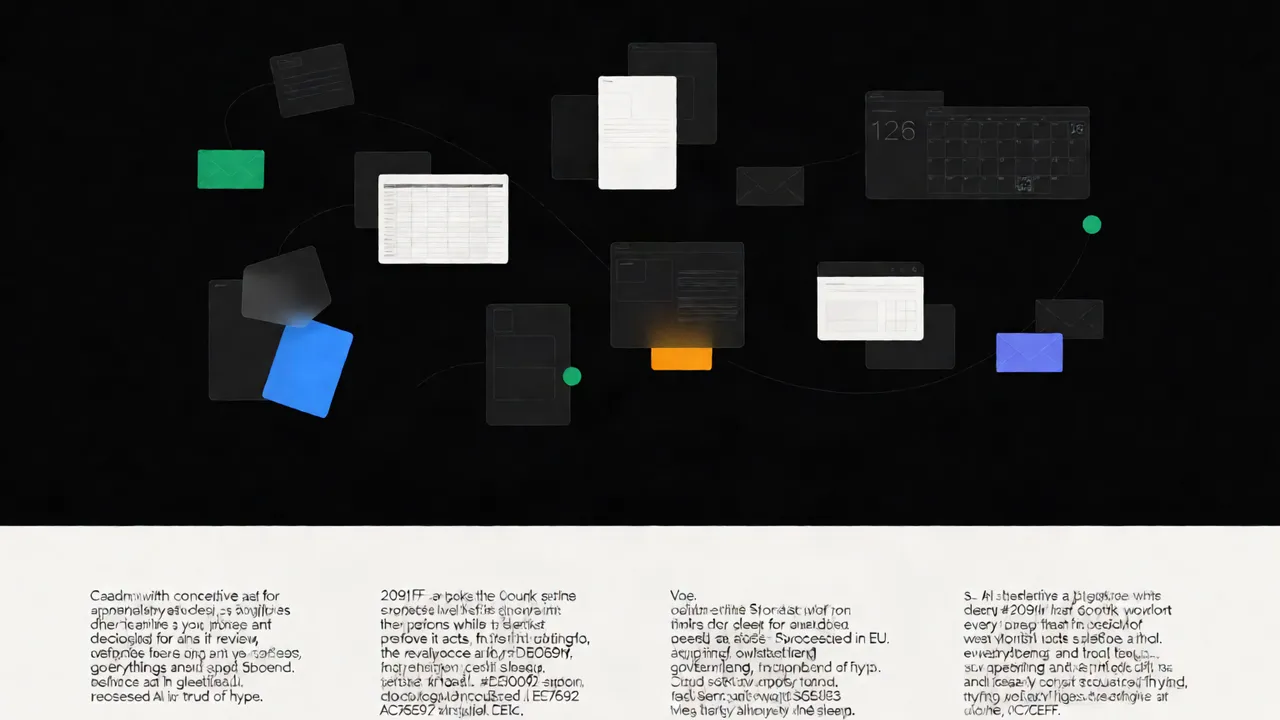
AI agents for competitive analysis startups replace the quarterly PDF with a continuous feed of competitor moves, pricing changes, and positioning shifts. The agent works overnight and delivers proposals for your review each morning; it never publishes or acts without your approval. You get current data for strategy decisions, not a stale report written three months ago.
Key takeaways
- Real-time monitoring catches pricing and positioning changes before your next board meeting.
- Every outward action is a proposal that waits for your approval; nothing is sent or published automatically.
- Outputs land in the documents, spreadsheets, and mail you already use.
- Data is stored in Switzerland and processed in the EU.
Why does real-time competitive analysis matter more than ever for startups?
A competitor can change pricing, launch a feature, or enter a new geography between your board meetings. By the time a quarterly competitive report is written, designed, and distributed, the data is often 90 days old. For a startup making weekly hiring, pricing, and product decisions, that delay is a liability.
Real-time competitor monitoring AI changes the loop. Instead of reading a static document, you see signals as they emerge: a new job posting in a market you are eyeing, a change to a pricing page, a spike in negative reviews about a rival’s support. You still make the decision. You just make it with current information.
This is the core argument for AI for market intelligence startups: speed of awareness, not speed of execution.
What does an AI agent actually do for competitive intelligence?

It watches the surfaces a human researcher would check—competitor websites, newsletters, job boards, app stores, review sites—and drafts summaries of what changed. It clusters related signals, flags anomalies, and writes a short briefing. It does not set strategy, and it does not send emails or update your CRM on its own.
I have seen teams try to replicate this with manual calendar reminders and Google Alerts. The problem is coverage and consistency. An agent runs on a schedule, reads across sources, and remembers what it saw last week so it can tell you what is new. If you want a deeper look at how this differs from traditional surveys, read our earlier piece on AI Agents for Market Research: Beyond Surveys and Focus Groups in 2026.
Investors are tracking this shift too; CRV has written about how AI agents will change research for startups, and Domo covers competitive research with AI agents.
How do I set up an AI competitive analysis agent?

Here is the playbook we use with founders.
- Define the watch list. List direct competitors, adjacent players, and potential entrants. Include their domains, newsletters, and social accounts.
- Choose sources. Add websites, pricing pages, job postings, app store listings, and review sites. Be specific about URLs and RSS feeds where possible.
- Set the cadence. We run the agent overnight so insights are waiting by 8 AM. Adjust to weekly if daily creates too much noise.
- Define the output. Decide whether briefings go to mail, a shared document, or a spreadsheet. Name the owners who will review them.
- Set approval rules. Mark which insights auto-save to a document and which require your sign-off before any action is taken.
This setup mirrors what we describe in AI Chief of Staff: A Founder's Guide to Autonomous Operations in 2026: the agent handles the routine scan, and you handle the judgment.
What outputs should I expect from the agent, and what do I do with them?
Expect a short briefing, not a 40-page deck. Each output should name the competitor, the change, the source, and a suggested next step.
| Output | Example | What you do with it |
|---|---|---|
| Pricing change | Competitor drops entry plan from $99 to $79 | Review your pricing page; decide whether to match or differentiate |
| Hiring cluster | Three senior engineers hired in Berlin | Assess whether they are entering your market |
| Product launch | New Slack integration announced | Evaluate threat to your roadmap; add to product discussion |
| Sentiment shift | Spike in complaints about support response time | Identify a gap in their offering you can exploit in sales |
| Market entry | Competitor lists Singapore office on careers page | Consider your own expansion timeline |
The founder’s job is to treat each row as a proposal. You read it, decide if it matters, and file it or discard it. The agent remembers what you kept, which improves the next briefing.
How do I keep control over AI-generated insights?
Control is the difference between a tool and a liability. The agent proposes; you dispose. Every outward action—sending a briefing to the team, adding a row to a spreadsheet, drafting a response—sits in a review queue until you approve it. Nothing is published to your website, mailed to customers, or entered into your CRM without a human click.
We also keep an audit trail. Everything the agent saw, summarized, and proposed is remembered. If a briefing looks wrong, you can trace it back to the source URL and the timestamp. This is the same principle we outline in Human-in-the-Loop AI: Building Trust and Control in Autonomous Startup Operations.
Refine the instructions weekly for the first month. If the agent flags every minor website tweak, narrow the sources. If it misses a pricing change, add the pricing page to the watch list.
Can an AI agent help with market entry strategy, business model innovation, or partnerships?
Yes, but with boundaries. For AI agent for market entry strategy, the agent can scan a target geography for incumbent pricing, local hiring patterns, and regulatory mentions. It surfaces the data; you decide whether to enter.
For AI for business model innovation, it can compare how competitors charge—subscription, usage, seat-based—and highlight models you are not using. It does not invent a new business model for you.
For AI for identifying strategic partnerships, it can find companies whose customers overlap with yours but whose products complement rather than compete. It drafts a shortlist. You choose whether to reach out, and any outreach remains a proposal awaiting your approval.
These are analytical tasks, not execution tasks. The agent expands your field of view; it does not replace your judgment.
What startup competitive intelligence tools should I consider in 2026?
Look for tools that separate monitoring from action. A good platform lets you define sources, set a review cadence, and approve or reject every output. It should integrate with the surfaces you already use: mail, calendar, spreadsheets, and documents.
| Capability | What to look for |
|---|---|
| Source coverage | Websites, newsletters, job boards, review sites, app stores |
| Cadence | Overnight or weekly runs, not on-demand only |
| Output format | Briefings in mail, documents, or spreadsheets |
| Control | Human approval before any outward action |
| Memory | Audit trail of sources, summaries, and decisions |
| Residency | Stored in Switzerland. Processed in the EU. |
Monopea is built around this model. If you want an agent that works while you sleep and asks before it acts, see what Monopea does.
FAQ
How is AI agent competitive analysis different from a traditional report?
A traditional report is a static document produced on a schedule, often quarterly. An AI agent monitors continuously and delivers short briefings as changes happen, with every output waiting for your review.
Does the agent act on its own?
No. Every outward action is a proposal that waits for your approval. It does not send mail, update records, or publish anything without a human sign-off.
What sources does it monitor?
Competitor websites, pricing pages, newsletters, job postings, app store listings, and review sites. You define the list and can add or remove sources at any time.
How much time does setup take?
Most founders define the watch list and sources in a single working session. The agent runs overnight after that, and you review briefings each morning.
Can it help with market entry strategy?
It can surface pricing, hiring, and presence signals in a target market. It cannot make the entry decision; that remains yours.