
Human in the loop AI agents place a person between the model and the action, ensuring every high-stakes move gets review before it happens. This approach transforms AI from a black box into a governed partner that respects your boundaries.
Key takeaways
- HITL isn't a bottleneck; it's a safety valve for critical decisions.
- Approval workflows should be embedded in tools you already use, like email or docs.
- Governance frameworks keep your data compliant and your operations auditable.
What is Human-in-the-Loop AI and why is it crucial for startups?
Human-in-the-loop (HITL) AI systems require human intervention at specific points in the automation process to verify outputs or make final calls. Startups adopt this to ensure accuracy and compliance while scaling operations without proportional headcount growth.
When I build agent systems, I treat HITL as a design constraint, not an afterthought. A model might draft a quarterly budget, but a CFO should review the final numbers before they hit the spreadsheet. This ensures the human remains the final arbiter on high-risk tasks. As noted in industry analyses, teams use HITL specifically to balance accuracy, trust, and compliance in one loop rather than sacrificing one for the others [[ Blog on HITL]].
The value proposition is clear: you get the speed of automation with the security of oversight. Without it, autonomous agents can hallucinate details in public-facing emails or execute financial transfers incorrectly. With it, you build a system that learns from corrections and improves over time.
How do you design governed AI workflows?
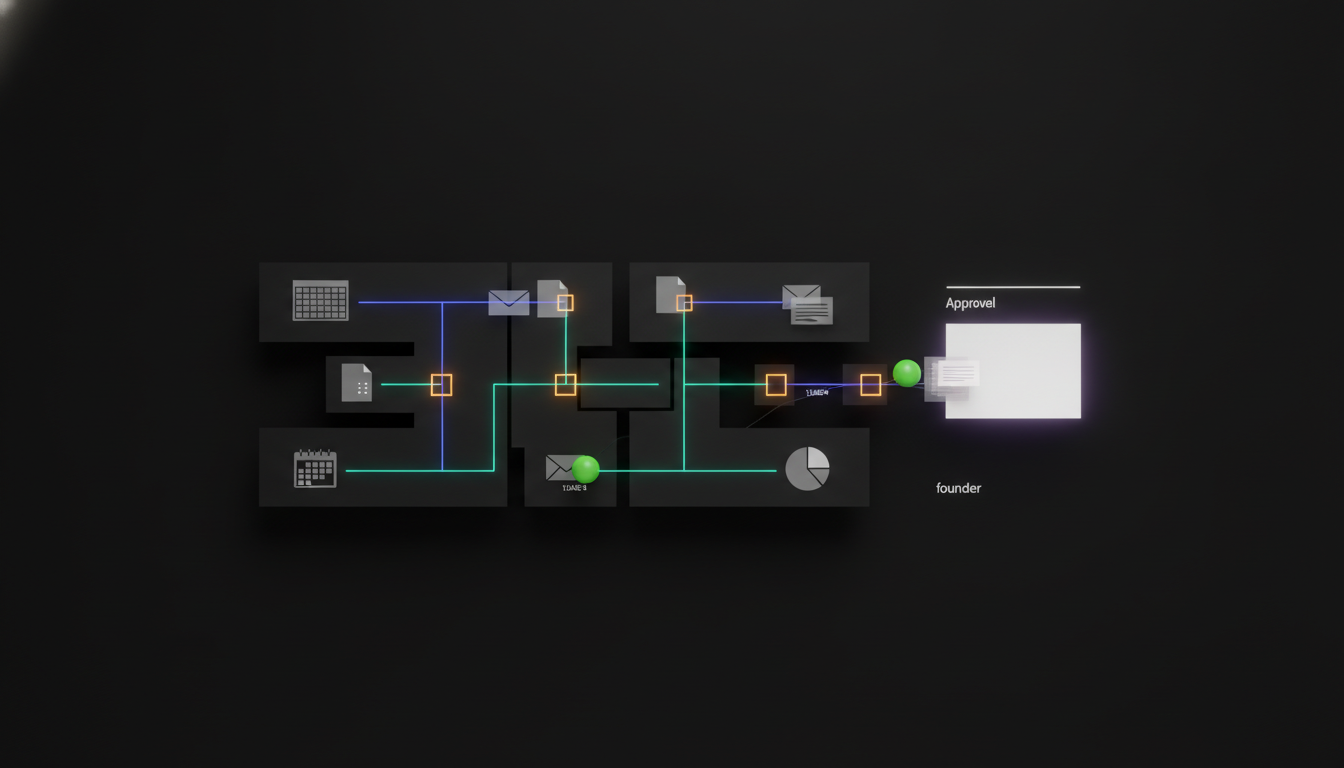
Designing governed workflows means mapping exactly where human judgment is required before an AI agent acts. You must decide if humans are in, on, or over the loop based on the risk and cost of error for each task.
I organize workflows by risk tier. Low-risk tasks like summarizing meeting notes run autonomously. High-risk tasks like sending external contracts require explicit approval. This separation prevents workflow paralysis while protecting your reputation. A practical way to implement this is to have the agent write the proposal into a document, then tag a human to click "approve" before it is sent.
| Workflow Type | Human Role | Example Use Case |
|---|---|---|
| In the Loop | Human executes task, AI assists | Researching data for a report |
| On the Loop | Human reviews and approves | Sending a client contract |
| Over the Loop | Human monitors system performance | Audit logging and compliance checks |
This structure keeps governance tight without slowing down the low-friction parts of your week. It also makes it easy to audit who made what decision later if a mistake occurs.
What are the best practices for AI agent approval workflows?
Effective approval workflows minimize friction while ensuring oversight happens. The system should send a clear proposal with context, not just a raw question that forces the human to do the work.
I recommend sending approvals as actionable notifications in tools you already monitor, like Slack or email. If the AI draft a response, include the source data that informed the draft. This allows the reviewer to understand the reasoning without digging through files. Developers in the community often discuss how these loops evolve from simple confirmations to more complex feedback mechanisms as models improve [[ community discussion]].
For structured data, always have the agent suggest the exact values to change. If the AI adjusts a budget line item, show the proposed change in a table alongside the original figure. This reduces cognitive load on the approver and increases the likelihood they will catch actual errors rather than just rubber-stamping.
How do you balance autonomy and oversight in AI decision making?
Balancing autonomy and oversight requires clear policies on what the AI can decide alone versus what needs a signature. If you allow too much autonomy, risk accumulates. If you allow too little, efficiency dies.
I use a "confidence score" system for internal tools. If the agent is confident a task is safe, it proceeds. If confidence is low, or if the task involves financial data, it halts for review. This mimics how you would delegate to a new hire. You trust them with routine tasks but keep control on sensitive account.
To make this work, you must define the boundaries clearly. A rule like "never send external emails over 500 words without review" is better than "use judgment." The former is automatable and enforceable. The latter is vague and leads to inconsistent outcomes across your team.
How do you ensure ethical AI and compliance in your startup?
Compliance in 2026 means your data residency and processing locations matter. Startups must ensure their AI providers do not train on your proprietary data and that your logs are stored securely.
We design our systems to respect data sovereignty. For instance, processing happens in the EU while storage remains in Switzerland to meet strict privacy standards. This ensures that when you use AI on sensitive spreadsheets or documents, you retain control over where that information lives.
Ethical AI also means avoiding bias in automated decisions. Always review the outcomes of hiring or credit scoring agents manually at first. Document these checks to show auditors that you actively monitor the system's fairness. This transparency builds trust with customers who are increasingly wary of how their data is used.
What do real-world examples of HITL look like?
In practice, HITL looks like a team member reviewing an AI summary before sharing it with a client. It also looks like a finance team verifying AI-calculated expenses before booking them to the general ledger.
Consider an agent that drafts meeting follow-ups. It can generate the text and assign action items automatically. However, it should wait for a final check before emailing attendees. This prevents the agent from accidentally assigning work to the wrong person or promising dates that don't exist in the calendar.
Another example is data entry. An agent might read an invoice and populate a spreadsheet. The human verifies the total against the PDF before the record is finalized. This workflow captures hours of manual entry time but ensures the books remain balanced.
If you want to see how these controls work in a unified system, you can explore our approach at Monopea. We build agents that act on your documents and calendars only after they have been reviewed by you.
FAQ
How is human in the loop AI different from standard automation?
Standard automation runs without stopping, whereas HITL inserts human review steps before critical actions. This ensures the human remains the final decision-maker on high-stakes tasks.
What tools support human in the loop workflows today?
Many modern agent platforms allow you to define approval gates. These systems pause execution and send notifications to human reviewers until they give the green light.
Is HITL too slow for high-velocity startups?
Not if you apply it selectively. Using HITL only for high-risk tasks keeps your daily operations fast while protecting you from costly errors.
How does HITL impact AI model performance over time?
Human feedback in the loop allows models to learn from corrections. This iterative process improves accuracy and reduces the need for oversight as the system matures.
Can startups achieve compliance with HITL systems?
Yes, HITL creates an audit trail of decisions. When combined with strict data residency rules, it helps meet GDPR and other regulatory requirements.